The 6th stage of grief: finding meaning

NICU donation from Mikayla's Grace

David Kessler recently identified the sixth stage of grief as finding meaning in your loss. Kessler states, “meaning comes through finding a way to sustain your love for the person after their death while you’re moving forward with your life. Loss is simply what happens to you in life. Meaning is what you make happen.”

This concept of finding meaning in grief has been around for much longer. In the 1980’s Miles Model for Parental Grief describes the search for meaning as part of the reorganization phase of grief.

If you have experienced a pregnancy loss meaning making can be an important part of your grief process. In this article you will learn what meaning making is and ways to make meaning of your loss.

The concept of meaning making simply put is finding meaning around why this loss happened to you. No one wishes for a loss or is glad that it has happened but many of you may find some peace in finding purpose.

Here are 3 ways to make meaning in your grief:

  1. Volunteer- some parents of loss have started non profits, other parents volunteer at organizations that support bereaved parents. Some of you may donate time or money.

    Local organizations: Mikayla’s Grace and Bereaved Parents of Madison both accept volunteers at different times of the year.

  2. Advocate- some bereaved parents find meaning in advocating for policies that impact bereaved parents and infant and pregnancy loss.

  3. Education/reducing stigma- Some of you may also find meaning making in educating others or reducing stigma by talking or writing about your loss. This may be in your social circles, on a social media platform, speaking at public events or writing news articles or blog posts.

If you have experienced a loss has meaning making been an important part of your grief? How have you found ways to make meaning of your loss?

Set up a free 15 minute consultation at www.kullcounselingmadison.com/contact

Pictured above, dropping off donations from Mikayla’s Grace to a local Nicu.

Pregnancy after infertility in Wisconsin

You have been trying for days, months, maybe even years. Part of you felt that it was never going to happen, maybe you even started to prepare yourself for that and then it does. And maybe you feel some joy, but you might also feel shock, denial or numb. It might not feel real even after you take pregnancy test after pregnancy test. Everyone has advice to give when it comes to getting pregnant when diagnosed with infertility but what happens when you get pregnant after infertility?

Does the infertility diagnosis go away?

No! You are not suddenly cured because you now are pregnant. It doesn’t take away the stress, the longing, the anger, the resentment, how its impacted your mental health or your finances or the impact it had on relationships.

Why do I feel like an imposter?

You may feel like an imposter after getting pregnant. You have wanted to be in this group of pregnant people for so long and now that you are here it doesn’t feel right. You feel like you don’t fit in. Infertility has changed you and changed this narrative you have had about becoming a parent.

Why do I fell guilty?

You may even feel guilty after becoming pregnant. It is common to feel guilty about leaving behind those that are still struggling with infertility. This can be isolating and feel very lonely. If you are feeling like an imposter in the pregnancy group, but also no longer feel like you fit in the infertility groups it can be hard to feel supported.

I am pregnant so I can’t complain.

It is so common for women to feel like if pregnancy is hard or not what they expected that they are allowed to feel this way. You may be telling yourself well this is what I wanted so I can’t complain or you may also be hearing this from others or well you got pregnant what did you expect. Even if you have a very wanted pregnancy that you tried very hard to get, pregnancy is still hard, uncomfortable at times, and not what you expected. Your feelings are VALID!

I don’t feel attached to my pregnancy.

It is common after infertility or a loss to not feel attached right away. This is your protective part telling you this isn’t safe, we need to protect you. For most of you this will grow and develop naturally. If it doesn’t feel like you are slowly starting to develop or that it is feeling more and more real- therapy can help.

I am feeling anxious.

It is common to notice some anxiety or sadness about being pregnant. If you are noticing these frequently or noticing that they are increasing it is important to get help. If you are noticing intrusive thoughts, nightmares or flashbacks there is help.

Set up a free 15 minute consultation at www.kullcounselingmadison.com/contact

Meditation for miscarriage, pregnancy after loss and new moms

I remember trying to meditate for the first time. I made every excuse in the book to avoid it. I convinced myself that I did not have time, convinced myself that it wasn’t a good use of my time, that I wasn’t doing it right so what was the point. It took YEARS until I developed a regular practice and it is still a work in progress.

Meditation has so many unbelievable benefits. According to Positive Psychology.com , meditation can reduce physical, mental and emotional disturbances. This can include anxiety, depression, pain, blood pressure, stress, migraines, IBS, ect. Meditation can be so effective.

So if it is so great, why isn’t everyone doing it? What I hear often is that it is hard, you may think you are doing it wrong and if you are doing it wrong what is the point? Other reasons can include you may feel uncomfortable, overwhelmed or don’t want to feel anything.

All of the reasons are valid. I like to invite my clients to start small. Try to take one minute everyday where you just try to tune into your body and breath and go from there. Many of you may find it is easier to do when you have someone guiding you. I certainly do! There are meditations everywhere it seems but finding one that resonates with you is important.

Recently I have created some meditations with you in mind. My library is building slowly but I currently have meditations for miscarriage, pregnancy after loss and motherhood. I will be adding more soon. If you are looking for a specific meditation that is a fit for you please- DM me, reply to this newsletter and let me know what you are looking for and I will do my best to make that available to you.

Set up a free 15 minute consultation at www.kullcounselingmadison.com/contact

Happy Meditating!

Postpartum PT Care, Interview with a therapist in Madison

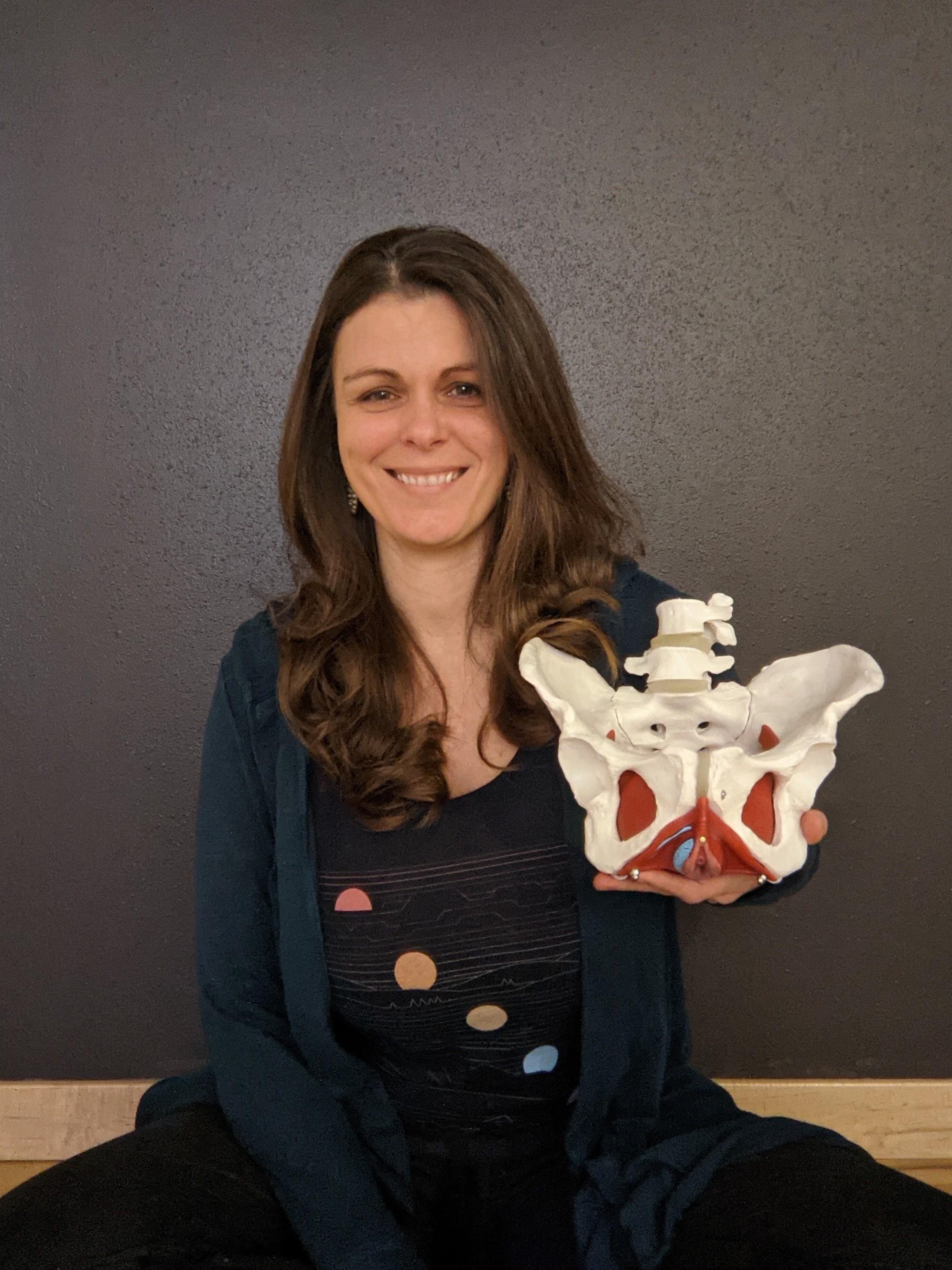
I had the honor of interviewing a therapist in Madison, Jessica Dufault from Mindful Motion Physical Therapy to learn more about how she helps postpartum care in Madison. She specializes in pelvic floor and women’s wellness. She is an excellent resource for women in the pre/postnatal stage and also works with women that have experienced a pregnancy loss.

Julie: Hello Jessica,

Thank you so much for agreeing to speak with me. Would you start by introducing yourself?

Jessica: Hello,

I'm excited to be talking with you about pelvic health today and thanks for inviting me!


I'm a mom, partner, business owner and Pelvic PT in a small private practice. I support people throughout their lifespan (18+ years old, my wisest client was 94!)


Julie: Who can benefit from PT for the pelvic floor?


Jessica: Anyone with a pelvis! But specifically if you've gone through life transitions such as pregnancy, postpartum and perimenopause. During these times, your health and pelvis can undergo transitions that can be challenging to navigate alone and may sometimes require additional TLC.


Julie: I work with a lot of pre/postpartum moms. What are some symptoms that they may notice if they need physical therapy?

Jessica: Great question! If you are pre/postpartum, here are some things to look out for

Peeing when you don't want to

Prolapse which is a shift in position of pelvic organs (feeling of pressure, heaviness or a "falling out" feeling)

Difficulty with internal menstrual product use

Pain with penetration, including sex, exams, menstrual products

Scar tissue restrictions or pain (perineal or cesarean)

Diastasis Recti (separation of abdominal tissue) which can lead to feeling weak or even LBP

Pain in areas like the low back, sacroiliac joint, hip. As well as sciatica and pubic symphysis dysfunction

You may also be looking for guidance on exercise or fitness

You may want support for prepping your body for demands of pregnancy and birth


Julie: If someone has a cesarean birth is PT still helpful?

Jessica: Yes! I had an unplanned cesarean and I had NO idea how difficult the recovery would be and didn't have the support I needed (which is one factor that pushed me from an orthopedic PT to a pelvic PT!).

Taking care of the scar tissue, assessing the position and movement of pelvic organs and regaining abdominal strength are all very important to ensure good long term pelvic health.

Julie: I also work a lot with bereaved moms. I think a lot of times they don't always think about being postpartum because they are not given the same attention as a mom that is lucky enough to bring a baby home. Do you have experience working with bereaved moms? How might your work look different? What might be important for them to know?


Jessica: I don't have a lot of experience here but over the years I have supported a few people who've experienced loss in pregnancy, during birth or a few weeks after birth. And maybe my experience is limited because of what you've already mentioned, that they aren't given the same attention, resources and discussion on all aspects of physical postpartum support. And yet they have the right and deserve the same access to physical pregnancy/post-pregnancy care.


Because if you have experienced a miscarriage in early or mid pregnancy prior to 20 weeks, or a stillbirth (whether vaginal or cesarean) at anytime past 20 weeks, your body has been impacted by hormones and all the accompanying physical changes to the body that pregnancy and birth can bring on. Which deserves attention and support!

We can start early education and support depending on each person's readiness however we wouldn't do a full pelvic assessment until 6 weeks post birth.

All of my clients are screened for mental and emotional health and this helps me to understand where they are in the (potential) grieving process as well as what support they've been able to access and then I can fill in referral gaps as necessary.

And with all clients, I follow their lead in how we approach the plan of care and meet them where they are and with what they (and their bodies) seem ready for. This is especially important for clients with a history of trauma or loss.

Julie: This is so helpful. Thank you! It is a great to know that you are aware and sensitive to the trauma and grief that all these moms are going through and ways to support them.

Julie: What are the benefits that PT can offer?

Jessica: Navigating changes in our bodies can be a lot and accessing a pelvic PT can help people feel well supported physically, emotionally & mentally. Knowing you don't have to "go at it alone" or "suffer in silence" can have a profound impact.

Also it's not just about the pelvic floor! My training and education allow me to support people with all aspects of their health and wellness as it relates to menstruation, fertility, pregnancy, postpartum, perimenopause & menopause.


Julie: If someone is interested in working with you, how do they initiate that?

Jessica: Our website is a great place to start. Lots of info there on who we support and all the options- like using insurance, choosing our ​self-pay programs or even our online programs. We also offer online scheduling through our website.

We do have a free and private Facebook group that everyone is welcome to join if they are looking for more community, support and general pelvic health education.


Julie: Thank you so much Jessica for taking the time to meet with me today. Is there any other information that would be important to know?

Jessica: I often get feedback that our space feels very warm and inviting and that talking with me is way easier than they anticipated (and they say "I wish I had come sooner!") We work hard to make the experience feel supportive and easy. If anyone has reservations, I'm also open to chatting via email or phone call as necessary to make sure it's the right fit overall.

Julie: Jessica you are a valuable resource to the community. Thank you so much for talking with me today and all that you do for the postpartum moms. One of the reasons I asked Jessica to speak today is because of all the great content I see her putting on instagram for free. If you haven’t found her on there yet she is that_ pelvic _lady.


Set up a free 15 minute consultation at www.kullcounselingmadison.com/contact


Anxiety therapist Madison: Still coping with Covid-19 and anxiety


This is an article that was modified from another article that I wrote in 2020 about anxiety during covid.

It is 2022. We are still dealing with Covid-19. If you are noticing the weight of it hitting you again you are not alone. We are at the two year mark, going on year 3. Your anxiety may be on the rise again as we head into another year. Here are some coping tips I offered in 2020 which are still applicable now. I have added in a few additional ones.

  1. Exercise- exercise is important for physical and mental health. If you have an anxiety disorder exercise plays an essential role in managing anxiety. Exercise not only releases serotonin and endorphins to improve your mood but also can reduce activation in the amygdala which is the area of the brain that sends a distress signal to activate our fight, flight, freeze response. https://www.health.harvard.edu/staying-healthy/understanding-the-stress-response

  2. Get outside- Time in the outdoors can be restorative. Having deficient levels of vitamin D can also be linked to depression and anxiety. https://www.unitypoint.org/livewell/article.aspx?id=ca7f4766-8ba8-43a2-bbe7-0ef9efab5c6d

  3. Meditate- Meditation can improve focus, decrease anxiety, and help with emotion regulation among other benefits.

  4. Keep a routine- our bodies thrive on routines. Routines can improve productivity, setting expectations and having some control.

  5. Sleep- REM sleep can also play a role in decreasing activation in the amygdala. Setting up a sleep routine can signal to our body when it is time to go to sleep.

  6. Social Support- these are hard times. While you many be social distancing from friends you do not need to isolate. Reaching out to friends can provide a sense of normalcy and a sense of belonging.

  7. Manage your screen time- Between work, school and socializing online many of your are getting more screen time than you ever have before. Screen time can impact anxiety, sleep and overall well-being.

  8. Focus on what you have control of- unfortunately with Covid-19 it may feel like there are many things that are out of your control. Focusing on these can lead to increased anxiety. Instead try focusing on what things are within your control. Make a plan for the things that are in your control, and let go of the things that are out of your control.

  9. Stay present- Ask yourself what do I know in this moment instead of the what ifs.

  10. Attitude of Gratitude- in the midst of all this chaos there is a lot to be grateful for. What do you feel grateful for? Write it down, say it out loud. Surround yourself with positive messages.

  11. Be mindful when reading the news. Is it serving you? Are you finding out anything new? What does knowing this information do for you? How are you feeling when you read the news? Do you need a break?

  12. It is okay if your comfort level changes- again, and again and again. Listen to your needs.

  13. Get dressed for your day. Even if you are working from home. Even if you don’t have any meetings.

  14. Weigh your risks. Everything has a risk when it comes to your physical and mental health. Calculate your risks versus what is important to you and then make your decision on what you are comfortable with.

  15. Acceptance- you are living in a global pandemic. If you are having anxiety right now- accept that it is there. Acknowledge it, name it, allow yourself to notice how it feels- notice what sensations go with that feeling and allow them to be there.

    Set up a free 15 minute consultation at www.kullcounselingmadison.com/contact

The emotional toll of a Missed Miscarriage

Having a miscarriage can be devastating. You may know signs and symptoms to look for  when your body may be starting the process of miscarriage and look for those throughout the first trimester. However, you may not know  that you can suffer a loss, but the body may not show signs of a miscarriage. This is referred to as a missed miscarriage.

Having a missed miscarriage can add an extra layer to the grief and trauma around early pregnancy loss. According to www.progny.com, “A missed miscarriage, also known as a missed abortion or a silent miscarriage, occurs when a fetus is no longer alive, but the body does not recognize the pregnancy loss or expel the pregnancy tissue. As a result, the placenta may continue to release hormones, so you may continue to experience signs of pregnancy.” A missed miscarriage can be devastating when there has not been any symptoms, and often, these symptoms may be typical of a healthy pregnancy - i.e., fatigue, nausea, etc. For most of you, you will find out about missed miscarriages when you go into your doctor’s office for your first appointment. One of the happiest days of your life (when you get to see your baby for the first time) can quickly turn to one of your saddest (finding out your baby is no longer alive).

For many carrying partners this can feel like your body has failed you, twice. Once, that your body was not able to carry a baby to term, and twice, because if your pregnancy was to end in a miscarriage why did your body not do this naturally? This can lead to a strong mistrust in your body that may lead to abuse or neglect of yourself. This also can present in a subsequent pregnancy causing anxiety and depression or ptsd. It can feel like your body is not a safe place for a healthy pregnancy after a missed miscarriage.

Having a missed miscarriage also leads you to what can be a difficult and painful decision of deciding how to manage the miscarriage process. While some people will wait to see if their body can complete the miscarriage on its own, most doctors will encourage you to schedule an intervention to manage the miscarriage process for health concerns.

After a decision has been made it can still be weeks to months to complete the process and symptoms of pregnancy may linger for months after that.

It is common to feel many different things, some common ones being shock, anger, denial, grief, shame, jealousy. You may feel a loss of control. It can be helpful to get connected to support during a missed miscarriage whether that is a support group, or a therapist that can help you talk through your decision, feelings and support you through the process and after a loss. Having a miscarriage can be isolating, finding support can make a huge difference.

Finding ways to be present in your body can be an important part of your process. Whether this is through grounding, centering, breathe work or exercise, movement or dance, it is important to be in your body and find healthy ways to reconnect with your body.

Set up a free 15 minute consultation at www.kullcounselingmadison.com/contact

Resources for New Moms/Parents in Madison, WI

Adjusting to parenthood can be tough. Adjusting to parenthood in the winter in a pandemic can lead to isolation and loneliness. Connecting with other new parents can help. Here are some local resources both virtual and in person that can help you connect.

Meriter Mother Baby Hour and Parent and Family Baby Hour-

-currently virtual

https://www.unitypoint.org/madison/parenting-communities.aspx

Fit 4 Mom- Harbor Athletic Club

-currently virtual

https://fit4mom.com/

Haumea- Located in Sun Prairie

Parent Social Hour (in person) and Baby and Me Yoga (virtual)

https://www.haumeamama.com/

Pax and Lux

Parent and Baby Group

virtual, Wednesdays 10-11 a.m.

https://www.paxandlux.net/parent-baby-group

Facebook Groups:

Hike it Baby

Meet up Groups:

https://www.meetup.com/

East Madison Moms

MOMS club of Middleton

Westside Mamas

Set up a free 15 minute consultation at www.kullcounselingmadison.com/contact

October is pregnancy and infant loss awareness month 2020

little pumpkin.PNG

October is pregnancy and infant loss awareness month. For me it is the time of year that I think about the baby that I lost through miscarriage. October is the month that I found out I was pregnant. I told my husband by buying pumpkins. One for him, one for our daughter, one for me and a tiny pumpkin to let him know we had a new pumpkin on the way. It was such a happy moment and I remember it so vividly even though it was 6 years ago now. Even though I know it is coming every year I am still surprised by it every year. This year it came early. My rainbow baby pointed to a small pumpkin the other day on our walk and said, “oh mom, look how cute this baby pumpkin” is.

Do you have moments like this? A memory or object that bring up thoughts of your baby?

This month is pregnancy and infant loss awareness month. This year is Covid-19. Usually it is a month filled of events that help you by bringing together a community of families that hold their babies in their hearts instead of their hands. This year that will look different. I have included a list of some virtual events in the Madison area. I know this year may be difficult for you because community can be such an important part of your healing journey. Please know that even though we are not able to gather in person, there is still a community here to support you.

OCTOBER:

1st: Miscarriage support group - The free monthly miscarriage support group will meeting virtually on October 1st from 5 - 6:15 p.m. Please email julie@kullcounselingmadison.com to register.

3rd: 10 a.m. CST: Now I Lay Me Down to Sleep virtual walk

The Virtual Walk includes an online presentation with readings, music, and speakers to honor your baby. During the presentation, each baby is honored by having his or her name read aloud.

Also the 3rd: Harley’s Hustle virtual 5k Set your course, set your pace, and just run. Share your pictures by tagging @HarleysHustle on social media.

8th: 6:30 p.m. GPS Hope Janesville (2nd Thursday)

12th: 5:30 - 7 p.m. Bo's Heavenly Clubhouse Support Meetings at Higher Grounds Coffee Shop in Beaver Dam (2nd Monday)

15th - 18th: Forever In Our Hearts Remembrance Day: Join by creating a sense of community and support found at in-person walks. There are many ways to join this event - purchase a yard sign, walk in your community, watch a video of the names of babies being remembered this year, and so on.

26th: 5:30 - 7 p.m. Bo's Heavenly Clubhouse Support Meetings at Higher Grounds Coffee Shop in Beaver Dam (4th Monday)

Set up a free 15 minute consultation at www.kullcounselingmadison.com/contact
Coping with Anxiety and Covid-19

anxiety woman

In the last few weeks it may feel that your world has been turned upside down. Many of you may be quarantined, social distancing, staying at home or safer at home. In this time of uncertainty, Covid-19, many of you may be feeling an increase of anxiety. Here are some tips for managing anxiety during the pandemic.

  1. Exercise- exercise is important for physical and mental health. If you have an anxiety disorder exercise plays an essential role in managing anxiety. Exercise not only releases serotonin and endorphins to improve your mood but also can reduce activation in the amygdala which is the area of the brain that sends a distress signal to activate our fight, flight, freeze response. https://www.health.harvard.edu/staying-healthy/understanding-the-stress-response

  2. Get outside- Time in the outdoors can be restorative. Having deficient levels of vitamin D can also be linked to depression and anxiety. https://www.unitypoint.org/livewell/article.aspx?id=ca7f4766-8ba8-43a2-bbe7-0ef9efab5c6d

  3. Meditate- Meditation can improve focus, decrease anxiety, and help with emotion regulation among other benefits.

  4. Keep a routine- our bodies thrive on routines. Routines can improve productivity, setting expectations and having some control.

  5. Sleep- REM sleep can also play a role in decreasing activation in the amygdala. Setting up a sleep routine can signal to our body when it is time to go to sleep.

  6. Social Support- these are hard times. While you many be social distancing from friends you do not need to isolate. Reaching out to friends can provide a sense of normalcy and a sense of belonging.

  7. Manage your screen time- Between work, school and socializing online many of your are getting more screen time than you ever have before. Screen time can impact anxiety, sleep and overall well-being.

  8. Focus on what you have control of- unfortunately with Covid-19 it may feel like there are many things that are out of your control. Focusing on these can lead to increased anxiety. Instead try focusing on what things are within your control. Make a plan for the things that are in your control, and let go of the things that are out of your control.

  9. Stay present- Ask yourself what do I know in this moment instead of the what ifs.

  10. Attitude of Gratitude- in the midst of all this chaos there is a lot to be grateful for. What do you feel grateful for? Write it down, say it out loud. Surround yourself with positive messages.

    For more information on coping with anxiety during the pandemic or to set up a free 15-minute consultation email julie@kullcounselingmadison.com or 608.239.4807.

Pregnancy after a loss meditation script

pregnancy after a loss meditation

Being pregnant after a loss can come with an increase of anxiety. Meditation can be a great way to get in your body, become aware of how you feel, and to stay present. Recently I recorded a meditation which can be found on the pregnancy after loss page on my website.

Here is the script:

Pregnancy after loss meditation-


I invite you to get into a comfortable position either with your feet on the floor or lying down. Rest your hands by your side or in your lap and begin to close your eyes.


Today we are going to be talking about pregnancy after a loss. There are many thoughts that can come up for those pregnant after a loss.


I invite you today to acknowledge your thoughts and just notice them, without judgment.  Our thoughts are not facts.


There is no wrong way to meditate. Meditation takes practice and it is okay if your mind wanders, if you notice your thoughts wandering simply let them go and bring your awareness back to your breath.


We will begin by bringing awareness into the breath. Inhale to the count of 3 and exhale to the count of 4. If at any moment today something feels uncomfortable in your body please skip it. We will continue to breath in to the count of 3 and out to the count of 4 bringing attention to our breath.


Breath in and out


In and out


We will begin by bringing awareness into our body. Starting by bringing awareness into our head, notice how your forehead, your eyes, your mouth, your cheeks your ears are feeling, notice any sensations without judgment.


Now bring your awareness down your head to your neck and shoulders, simply noticing how you are feeling.


Now draw your attention to your chest and back and simply notice. Continue to breath into the count of 3 out to the count of 4.


Bring your awareness into your arms and then your hands. Notice if they feel heavy, light, warm or cold. Simply notice how they are feeling at this very moment.


Continue down your body now into your lower back, stomach and hips noticing any sensations. Continue traveling down into your legs and toes continuing to breath and notice any sensations.


Take a deep breath in through you head and breath out through your toes.


We will now return to our heart and our stomach. If it feels okay to you bring one hand to your heart and another to your belly.


Continue to breath in to the count of 3 and out to the count of 4.


Bring breath and awareness to your heart and your belly. Your body is strong. Your body can grow a healthy baby. You can hold love in your heart for both your loss and for the new baby growing inside of you.


Whatever emotions you are feeling inside or okay. Emotions are not good or bad, they just simply are. Notice your emotions without judgment and bring your awareness back to your breath.


Continue to breath. If you have an intention for your pregnancy you can say it silently now.


As we start to return now to the room know that your baby is loved, that your body is strong and capable of caring for this baby.


Know that meditation is available whenever you need it. You can return to these feelings of calm whenever you need to.


I will count back from 5 and then we will return to the room.


5, 4, 3 begin to bring movement back to your body, 2 bring awareness back to the room 1 open your eyes.

Set up a free 15 minute consultation at www.kullcounselingmadison.com/contact